Forged Steel Elbow Manufacturer,Forged Steel Elbows Factory Forged steel elbows represent the pinnacle of performance and durability among pipe fittings designed to change flow direction. Unlike elbows produced by casting or formed from pipe/plate (welded), forged elbows are manufactured through the controlled plastic deformation of solid steel billets or bars under immense pressure, typically while the metal is hot. This fundamental forging process is what grants them their exceptional properties.
Advantages Of Forged Steel Elbows
Enhanced Grain Structure: The forging process refines the steel's internal grain structure, aligning it continuously around the elbow's shape. This eliminates porosity, voids, and inclusions common in castings, resulting in a homogeneous, defect-free microstructure.
Increased Strength & Toughness: The refined grain flow significantly boosts mechanical properties. Forged elbows exhibit superior tensile strength, yield strength, and impact toughness compared to their cast or welded counterparts. They are far more resistant to brittle fracture, especially under shock loading or low-temperature conditions.
Improved Fatigue Resistance: The absence of internal defects and the strong, continuous grain structure make forged elbows exceptionally resistant to fatigue failure caused by cyclic pressure fluctuations or vibration, a critical factor in high-stress applications.
Greater Density & Integrity: The compressive forces during forging compact the metal, increasing its density and ensuring a leak-proof structure with inherent soundness throughout the wall thickness.
Forged Steel Elbow Parameters
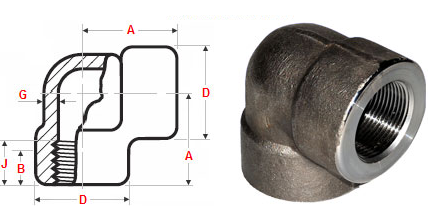
Forged Elbow Dimensions
| Class |
DN |
NPS |
B |
D |
C(Ave) |
C(Min) |
J |
K |
| 3000 |
6 |
1/8″ |
21 |
17 |
22 |
3.18 |
6.4 |
6.7 |
| 8 |
1/4″ |
21 |
17 |
22 |
3.18 |
8.1 |
10.2 |
| 10 |
3/8″ |
25 |
19 |
25 |
3.18 |
9.1 |
10.4 |
| 15 |
1/2″ |
28 |
22 |
33 |
3.18 |
10.9 |
13.6 |
| 20 |
3/4″ |
33 |
25 |
38 |
3.18 |
12.7 |
13.9 |
| 25 |
1″ |
38 |
28 |
46 |
3.68 |
14.7 |
17.3 |
| 32 |
1 1/4″ |
44 |
33 |
56 |
3.89 |
17 |
18 |
| 40 |
1 1/2″ |
51 |
35 |
62 |
4.01 |
17.8 |
18.4 |
| 50 |
2″ |
60 |
43 |
75 |
4.27 |
19 |
19.2 |
| 65 |
2 1/2″ |
76 |
52 |
92 |
5.61 |
23.6 |
28.9 |
| 80 |
3″ |
86 |
64 |
109 |
5.99 |
25.9 |
30.5 |
| 100 |
4″ |
106 |
79 |
146 |
6.55 |
27.7 |
33 |
| 6000 |
6 |
1/8″ |
21 |
17 |
22 |
3.18 |
6.4 |
6.7 |
| 8 |
1/4″ |
25 |
19 |
25 |
3.3 |
8.1 |
10.2 |
| 10 |
3/8″ |
28 |
22 |
33 |
3.51 |
9.1 |
10.4 |
| 15 |
1/2″ |
33 |
25 |
38 |
4.09 |
10.9 |
13.6 |
| 20 |
3/4″ |
38 |
28 |
46 |
4.32 |
12.7 |
13.9 |
| 25 |
1″ |
44 |
33 |
56 |
4.98 |
14.7 |
17.3 |
| 32 |
1 1/4″ |
51 |
35 |
62 |
5.28 |
17 |
18 |
| 40 |
1 1/2″ |
60 |
43 |
75 |
5.56 |
17.8 |
18.4 |
| 50 |
2″ |
64 |
44 |
84 |
7.14 |
19 |
19.2 |
| 65 |
2 1/2″ |
83 |
52 |
102 |
7.65 |
23.6 |
28.9 |
| 80 |
3″ |
95 |
64 |
121 |
8.84 |
25.9 |
30.5 |
| 100 |
4″ |
114 |
79 |
152 |
11.18 |
27.7 |
33 |
| 9000 |
6 |
1/8″ |
25 |
19 |
25 |
6.35 |
6.4 |
6.7 |
| 8 |
1/4″ |
28 |
22 |
33 |
6.6 |
8.1 |
10.2 |
| 10 |
3/8″ |
33 |
25 |
38 |
6.98 |
9.1 |
10.4 |
| 15 |
1/2″ |
38 |
28 |
46 |
8.15 |
10.9 |
13.6 |
| 20 |
3/4″ |
44 |
33 |
56 |
8.53 |
12.7 |
13.9 |
| 25 |
1″ |
51 |
35 |
62 |
9.93 |
14.7 |
17.3 |
| 32 |
1 1/4″ |
60 |
43 |
75 |
10.59 |
17 |
18 |
| 40 |
1 1/2″ |
64 |
44 |
84 |
11.07 |
17.8 |
18.4 |
| 50 |
2″ |
83 |
52 |
102 |
12.09 |
19 |
19.2 |
| 65 |
2 1/2″ |
95 |
64 |
121 |
15.29 |
23.6 |
28.9 |
| 80 |
3″ |
106 |
79 |
146 |
16.64 |
25.9 |
30.5 |
| 100 |
4″ |
114 |
79 |
152 |
18.67 |
27.7 |
33 |
Forged steel elbows are predominantly manufactured to standards like ASME B16.11 (for socket weld and threaded ends) and MSS-SP-79/SP-95. Common material specifications include:
Carbon Steel: ASTM A105 (ambient to moderate temperature service).
Alloy Steel: ASTM A182 Grades F5, F9, F11, F22, F91 (for high-temperature, high-pressure, and corrosive service requiring enhanced strength and creep resistance).
Stainless Steel: ASTM A182 Grades F304/304L, F316/316L, F321, F347 (for corrosion resistance and moderate temperatures).
Duplex & Super Duplex Stainless Steel: ASTM A182 Grades F51, F53, F55 (for superior strength and chloride corrosion resistance).
Sizes, Connections & Angles
Sizes: Primarily used for smaller bore piping, typically ranging from 1/8" NPS to 4" NPS (DN6 to DN100), though larger forged preferred fittings exist. They are the choice where welded pipe sizes are impractical or where maximum integrity is paramount in smaller lines.
Connections: Most commonly supplied with Socket Weld (SW) or Threaded (NPT) ends for direct connection to pipes or valves. Some special designs might feature butt weld ends, though this is less common for standard forged elbows.
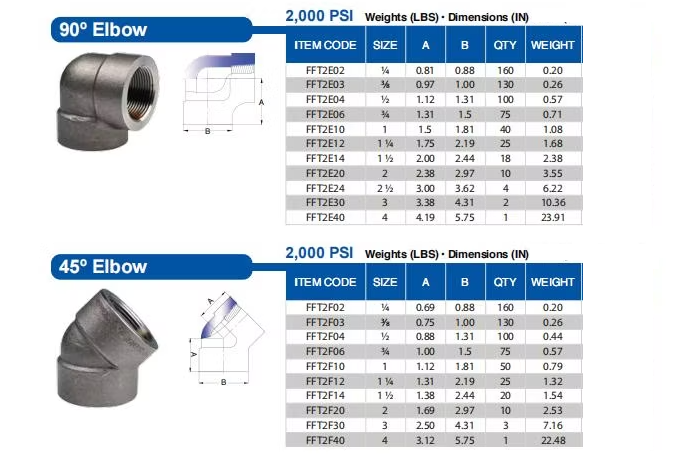
Angles: Standard configurations include 90° and 45° elbows. Long Radius (LR) designs are standard for forged fittings, promoting smoother flow and lower pressure drop.
Applications Forged elbows are indispensable in industries demanding the highest levels of safety, reliability, and performance under extreme conditions:
Oil & Gas: High-pressure wellheads, manifolds, Christmas trees, production piping, instrument lines, compressor stations, and refinery critical process lines.
Power Generation: High-pressure steam lines, boiler feedwater systems, turbine bypass systems, and auxiliary piping in fossil fuel and nuclear plants.
Chemical & Petrochemical Processing: Critical process lines handling volatile, toxic, or high-pressure fluids, reactor feed lines, and high-pressure utility systems.
Hydraulic & Pneumatic Systems: High-pressure fluid power lines in machinery, aerospace, and marine applications.
Shipbuilding & Offshore: Critical piping systems on vessels and platforms subject to high pressures and dynamic loads.
Valve Manifolds & Instrumentation: Small-bore tubing and piping connections requiring robust, leak-tight fittings.


